
From Bare Hands to Latex: A History of the Goalkeeper Gloves
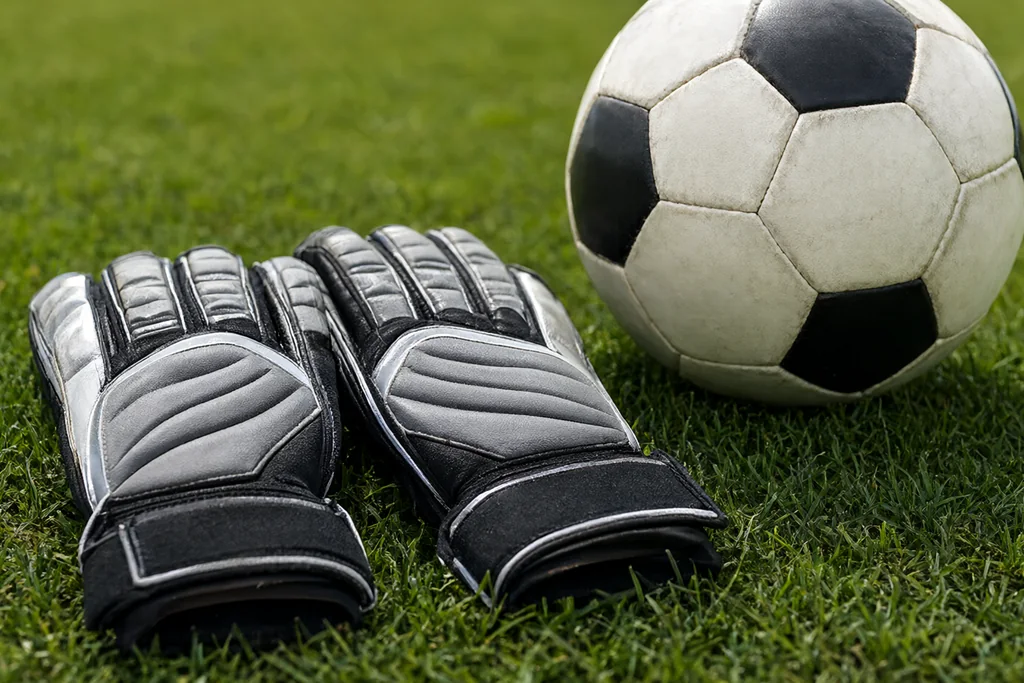
The goalkeeper spends the match with the ball, and for most of the game's history his hands were the only equipment he had. Bare palms, cold fingers and a wet leather ball that behaved like a bar of soap in the rain made the position a test of nerve as much as of skill, and the men who survived it built a reputation for eccentricity that outlasted their careers.
The glove is the newest major piece of equipment in football, and one of the most revealing. Its history tracks every change in how the position was coached, priced and understood, from bare-handed improvisation to a tuned piece of latex engineering.
Bare hands and the culture of the position
For decades a goalkeeper was expected to catch with what he was born with. On dry days this was possible; on wet days it was theatre, and the classic picture of the position is a man smothering a shot to his chest rather than attempting a clean catch. The technique was shaped entirely by what the hands could not do.
Cold weather made the problem worse. Numb fingers lose both grip and feeling, and the first practical step was not a glove but a pair of thin woollen mittens or a knitted cap pulled over the hand. Those makeshift coverings became the visual trademark of the trade, and a goalkeeper in cold conditions was recognisable at a glance.
- Bare hands for the first decades of the game.
- Woollen mittens and knitted coverings used mainly for warmth.
- Chest catches and deflections preferred to clean handling in the wet.
- Eccentricity became part of the position's identity and reputation.
The man in black and the myth of the specialist
Goalkeeping became a separate discipline in the middle of the twentieth century, and one figure above all turned it into an art. A tall, athletic keeper famous for an all-black kit and brilliant improvisation made the position glamorous rather than marginal, and the visual signature stuck: goalkeepers have reached for distinctive colours ever since.
That era also invented the coaching language of the position. The vocabulary of positioning, narrowing angles and dominating the area was built by men who had no gloves and no protective padding, and much of it still appears in modern coaching manuals with barely an alteration.
The palm that changed the position
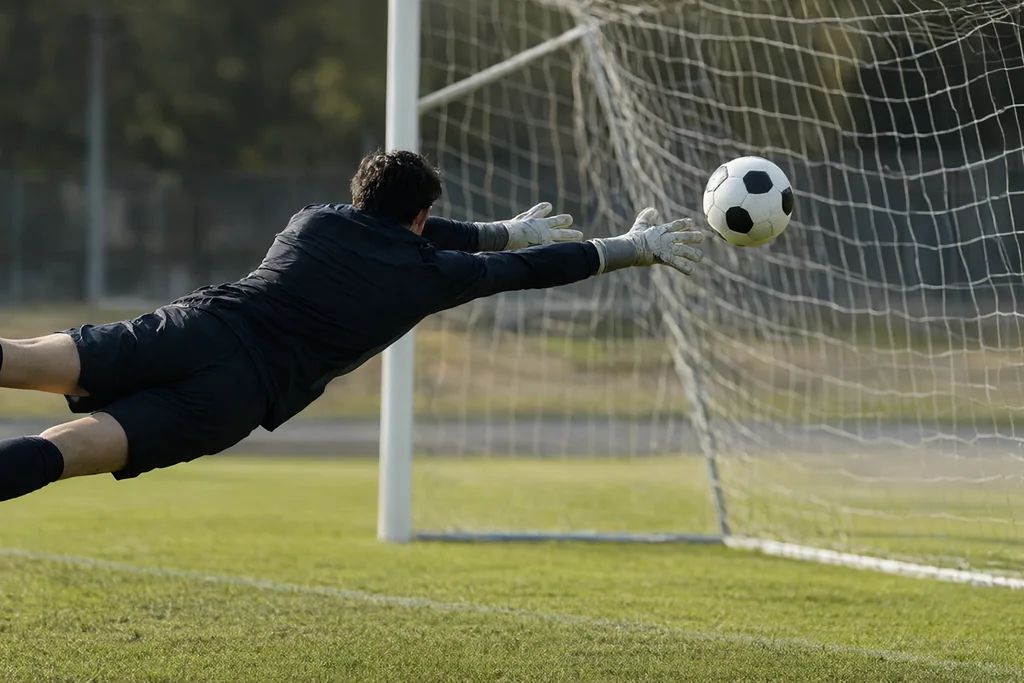
Everything shifted when a company began applying a rubber-like synthetic foam to the palm of a goalkeeper glove. The material gripped a wet ball in a way leather never could, and the position was transformed within a decade. Suddenly a keeper could hold shots that previous generations could only parry, and catching rather than punching became the preferred technique again.
| Generation | Material | Effect on goalkeeping |
|---|---|---|
| Bare hands | None | Chest catches, deflections, high error rate |
| Woollen covering | Knit wool | Warmth only, almost no grip benefit |
| Leather palm | Stitched leather | Better hold, still poor when wet |
| Synthetic foam palm | Rubber-like foam | Clean catching returns to the game |
| Modern engineered latex | Layered latex and mesh | Tuned grip, fit and finger protection |
Weight, fit and the engineering arms race
Once palms worked, the rest of the glove became an engineering problem. Finger spines were added to resist hyperextension, backhand materials were designed to stay light, and closure systems were rebuilt so the glove behaved like a second skin. A modern keeper may carry several pairs into a single match, choosing between maximum grip, protection or a dry-weather build.
The arms race has a strange side effect. Gloves have become consumables: professionals change pairs within a match, manufacturers release new colourways every season, and the equipment market for a position that touches the ball less than anyone has become one of the largest in the sport.
What the gloves say about the position
The history of goalkeeping equipment reveals a role that was always being renegotiated. When hands were bare, the keeper was a last line of defence. When palms gripped, he became a catcher who could dominate a crowded area. Now that he must also pass accurately under pressure, the glove is judged on how it behaves with the ball at the feet.
Rule change and equipment change met in the middle. The ban on handling back-passes forced goalkeepers to become footballers, and the gloves followed: thinner palms, better feel, lighter fit. The equipment adapted to the law, and the position changed shape around both.
The newest equipment in the game
Gloves are the youngest major item in football, and the only one whose history is fully documented in colour. In a century a bare-handed trade became a technical specialism with its own coaching, conditioning and equipment culture, and the change happened inside living memory of the men who made it.
The next time a goalkeeper holds a ferocious shot with two hands at full stretch, remember that for most of the game's life that catch was physically impossible. The sport's most dramatic position was rebuilt by a piece of foam, and the vault keeps the receipt.
Keep digging in the vault
Olympe VIP Elysium: rungs, 2500 € cap and when not to chase
The badge does not skip KYC. Let the club follow volume you were already playing.
2026-09-08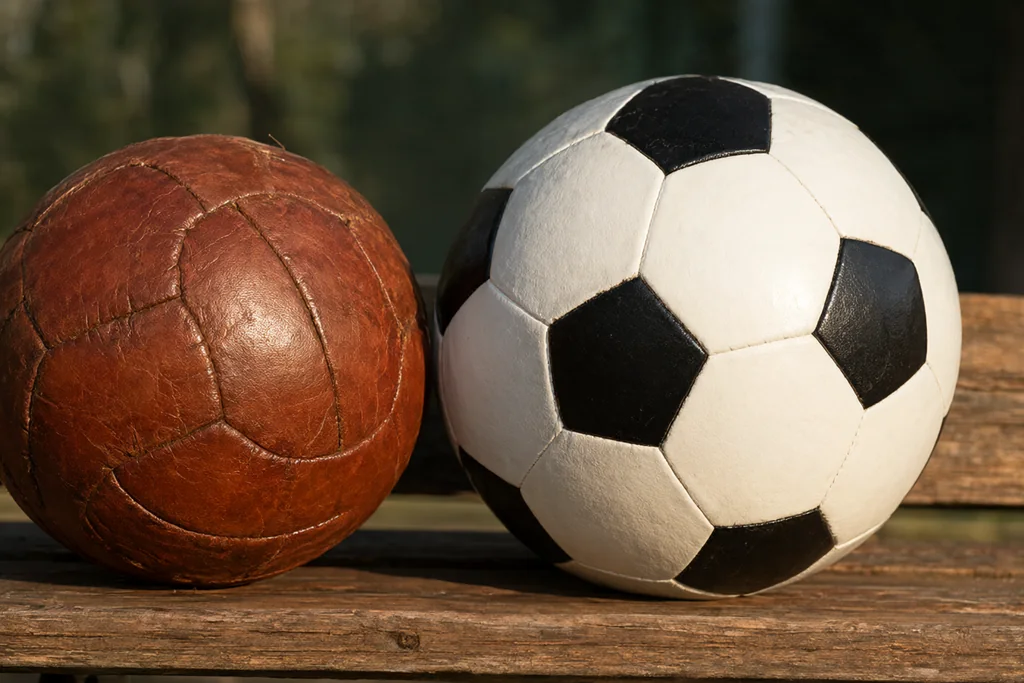
The Match Ball: Weight, Panels and the End of the Wet-Weight Problem
The laws never named a material, a panel count or a pressure. The ball rewrote what players could physically do anyway.
2026-09-07
The Bench Was Illegal: How Substitutes Won Their Place
For nearly a century a team was the eleven who started. The bench arrived because one injury made the old rule impossible to defend.
2026-09-06