
Maradona 1986: The World Cup One Player Owned
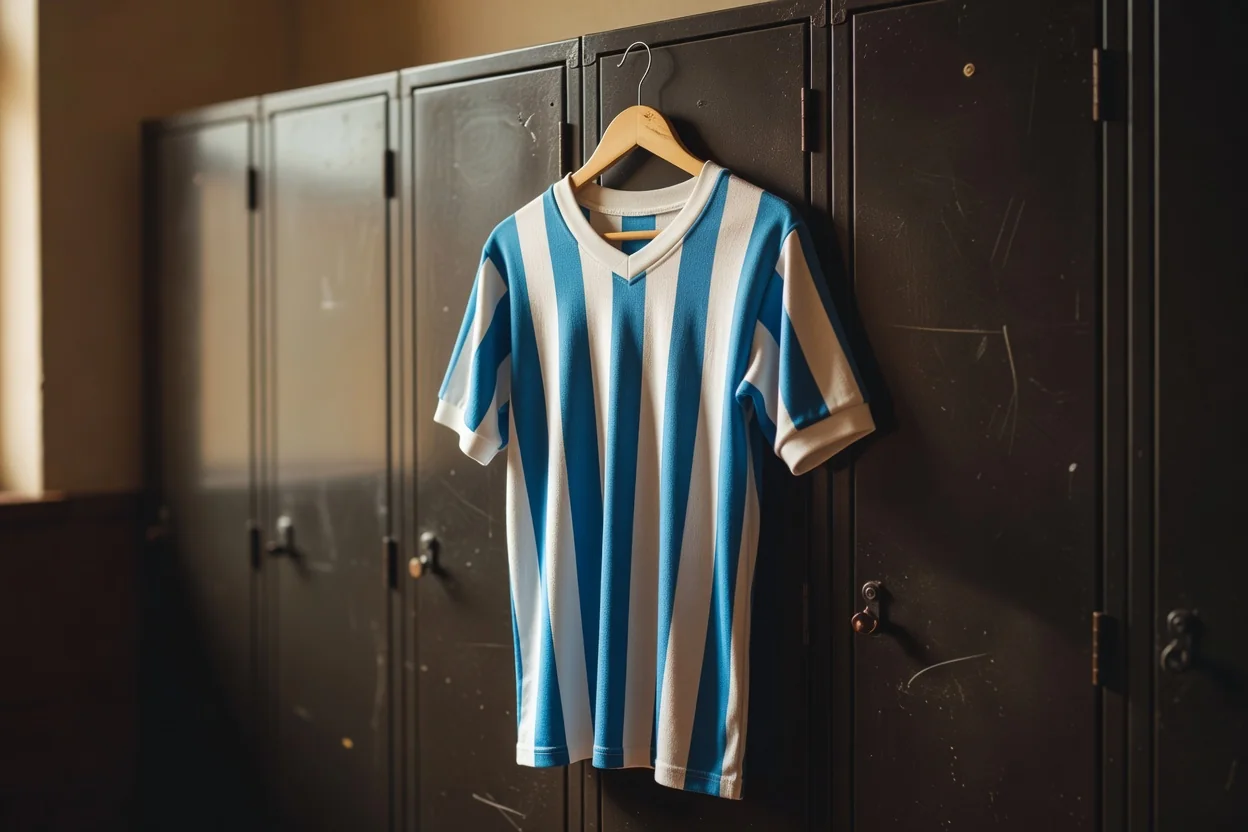
No footballer has ever bent a World Cup to his will the way Diego Maradona bent Mexico 1986. Five goals, five assists, and direct involvement in ten of Argentina's fourteen goals across seven matches. He was 25, carrying a mediocre squad, and he won the tournament through a mixture of genius, cunning and sheer refusal to lose.
The tournament is remembered for four minutes against England, but the full month was a masterclass: two goals in the semi-final, the decisive pass in the final, and more fouls suffered than any player in a single World Cup since records began.
The road to the Azteca
Argentina arrived in Mexico in chaos. Coach Carlos Bilardo had spent two years fighting the federation, the press and parts of his own squad over his 3-5-2 system and his insistence that everything run through Maradona. The team had won three of its previous fifteen internationals.
The group stage hinted at what was coming. Maradona scored against South Korea, set up three goals in the draw against Italy and bulldozed through a bruising match with Bulgaria. Against Uruguay in the second round he was quiet for 70 minutes and decisive for the other 20, as Argentina ground out a 1-0 win. Bilardo's plan was working: defend with five, build with three, and give the ball to the number ten.
Four minutes in June: England, 22 June 1986
The quarter-final against England, four years after the Falklands War, produced the two most replayed goals in the sport's history, scored four minutes apart by the same man.
The first, on 51 minutes, was punched in with a raised left fist past Peter Shilton, unseen by referee Ali Bin Nasser. Maradona later called it the Hand of God, and it remains the most famous act of cheating ever rewarded. The second, on 55 minutes, was its opposite: he collected the ball inside his own half, turned away from Peter Beardsley and Peter Reid, slalomed past Terry Butcher twice and rounded Shilton. FIFA voters later named it the Goal of the Century.
- The solo run covered roughly 60 metres and eleven touches in ten seconds.
- England's Terry Butcher was beaten twice in the same move, the second time while trying to recover the first.
- Argentina won 2-1; Gary Lineker's header on 81 minutes made him the tournament's top scorer with six.
Belgium, West Germany and the crowning
In the semi-final against Belgium, Maradona scored twice in the second half, the second another slalom through three defenders, and Argentina won 2-0. The final against West Germany at the Azteca was the one match where he was successfully shackled: Lothar Matthaus marked him tight, Germany recovered from 2-0 down to 2-2, and the game looked lost.
Then, on 84 minutes, Maradona produced the pass of the tournament, a first-time ball through the inside-left channel that sent Jorge Burruchaga clear for the winner. Argentina 3-2. He had been anonymous for most of the match and still decided it.
| Round | Opponent | Goals | Assists |
|---|---|---|---|
| Group | South Korea 3-1 | 0 | 3 |
| Group | Italy 1-1 | 1 | 0 |
| Group | Bulgaria 2-0 | 0 | 1 |
| Last 16 | Uruguay 1-0 | 0 | 0 |
| Quarter-final | England 2-1 | 2 | 0 |
| Semi-final | Belgium 2-0 | 2 | 0 |
| Final | West Germany 3-2 | 0 | 1 |
What the tournament meant afterwards
Mexico 1986 turned Maradona from a great player into a folk hero, especially at home, where the Hand of God was read as justice after 1982. He carried the aura to Napoli and won the club's first two Serie A titles in 1987 and 1990, plus the UEFA Cup in 1989, achievements that rank with anything in his international career given the club's history before him.
The tournament's brutality belongs in the record too: Maradona was fouled 53 times across seven matches in Mexico, still the highest single-tournament count ever recorded, nearly double what modern stars endure. FIFA's official poll in 2002 confirmed the second England goal as the Goal of the Century, and the match ball from that afternoon later sold at auction for over two million pounds, the most expensive football ever sold. At club level the same summer he was already Napoli's idol, and the Serie A titles of 1987 and 1990 remain the only ones in the club's history before the 2023 revival.
The ball from the final, the shirts, the broadcast tapes: the vault treats 1986 as the complete performance against which every one-man World Cup is measured, and so far every challenger, from Baggio in 1994 to Messi in 2022, has come up short of the full month Maradona delivered in Mexico.
The later chapters, the 1990 final defeat, the ephedrine positive that ended his 1994 World Cup, complicate the legacy but cannot touch the core of it. Since 1986, no player has dominated a World Cup so completely. Zidane in 1998 and 2006, Ronaldo in 2002 and Messi in 2022 all owned moments. Maradona owned the entire month, and football has been measuring every great tournament performance against his ever since.
Keep digging in the vault
Pele and the Three World Cups No One Has Matched
A 17-year-old who cried on the shoulders of his teammates in 1958 finished with three winners medals. Nobody has come close since.
2026-09-02
Johan Cruyff: The Man Who Taught Football to Think
Three European Cups as a player, one as a coach, and an idea about space that clubs still teach. Cruyff influence is everywhere.
2026-08-28
Franz Beckenbauer: The Kaiser Who Reinvented Defending
He started attacks from behind his own defence and finished them in the opposition box. The libero existed before him; he made it royal.
2026-08-25