
Jules Rimet Trophy: Stolen Twice, Found by a Dog

The original World Cup trophy survived World War II hidden in a shoebox under a bed, was stolen from a London exhibition in 1966 and recovered by a dog named Pickles, was handed to Brazil permanently in 1970, and was stolen again in 1983, this time forever. The Jules Rimet trophy lived a stranger life than most of the players who lifted it, and its story explains why the trophy used today can never be won outright.
Victory, the winged goddess on a deep blue base, stood just 35 centimetres tall. Yet for forty years it was the most wanted object in sport, and its fate reads like a crime novel with a football prologue.
From Rimet's suitcase to a Roman shoebox
The trophy, designed by the French sculptor Abel Lafleur for the 1930 tournament, was a gold-plated sterling silver figure of Nike, the Greek victory goddess. FIFA renamed it for Jules Rimet in 1946, honouring the president who had carried it across the Atlantic in his luggage for the first World Cup.
The war nearly claimed it. With Europe in flames, the trophy was in Italy, holders since 1938, and Ottorino Barassi, the Italian FIFA vice-president, quietly removed it from a Rome bank vault and hid it in a shoebox under his bed, keeping it from both the Nazis and the temptation of melting it down. It re-emerged only for the 1950 tournament in Brazil.
London 1966: stolen before the tournament
Four months before the 1966 World Cup, the trophy went on display at a stamp exhibition in Westminster's Central Hall. On 20 March, with the guards at lunch, thieves prised open the case and took it. England, about to host the world, had lost the World Cup. The FA secretly commissioned a replica from the silversmith George Bird as insurance.
The rescue came from an unlikely detective. On 27 March, a collie named Pickles, out for a walk in South London with his owner David Corbett, sniffed out a package wrapped in newspaper under a garden hedge. It was the trophy. Pickles became a national celebrity, appeared on television, received a year's supply of dog food and was invited to the England team's celebration banquet after they won the tournament. The thief was caught but the trophy's week in hiding entered folklore.
Brazil keeps it, Rio loses it
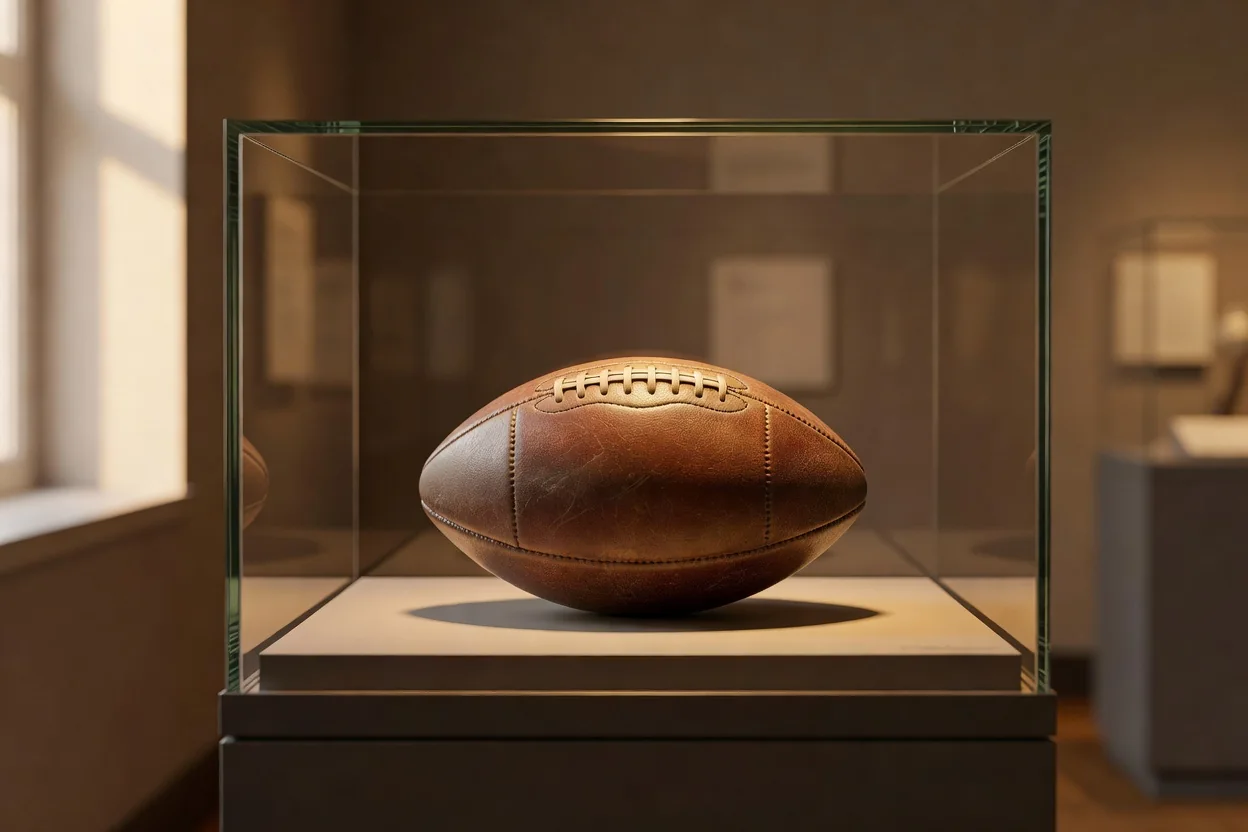
Rimet had decreed that the first nation to win three World Cups would keep the trophy, and Brazil's third title, in Mexico in 1970, made the little goddess permanent Brazilian property. A new trophy, the one used today, was commissioned from the Italian sculptor Silvio Gazzaniga for 1974: solid 18-carat gold, 36.8 centimetres, two figures holding up the Earth, and crucially, never awarded outright.
The little goddess's luck finally ran out on 19 December 1983. Thieves broke into the Brazilian confederation's headquarters in Rio, overpowered a guard, and took the trophy from its cabinet. It has never been recovered and is widely believed to have been melted down for its gold within days, a few thousand dollars' worth of metal that happened to be the most historic object in world sport. Two men were convicted in the late 1980s; the trophy itself was never found. FIFA later presented Brazil with a replica.
| Year | Event |
|---|---|
| 1930 | Presented for the first time, to Uruguay in Montevideo |
| 1939-45 | Hidden in a shoebox under Ottorino Barassi's bed in Rome |
| 1946 | Renamed for the FIFA president |
| 1966 | Stolen in London, found a week later by Pickles the dog |
| 1970 | Won outright by Brazil after their third title |
| 1983 | Stolen from the CBF in Rio and never recovered |
Why the new trophy stays home
The current World Cup trophy travels under armed guard, is returned to FIFA after each presentation, and cannot be kept even by serial champions; winners receive a gold-plated replica. That caution is the direct legacy of 1983, and of 1966 before it.
- The trophy was gold-plated sterling silver, 35 centimetres tall, depicting Nike, the Greek goddess of victory.
- Brazil's 1970 team was the first and last to keep it, under the three-titles rule Rimet himself had set.
- The FA's secret replica, made in 1966 as insurance, surfaced at auction decades later and sold for over 250,000 pounds.
- The current Gazzaniga trophy weighs 6.175 kilograms of 18-carat gold and cannot be won outright, however many titles a nation collects.
Replicas filled the gaps the original left behind. The English replica of 1966 sat in the National Football Museum for years, and FIFA's official copy went to Brazil after 1983, so both nations that most loved the little goddess now guard lookalikes. The lesson reshaped the sport's handling of its crown: today's trophy spends most of its life in Zurich, travels only under strict protocol, and is touched at the presentation by winners who will never own it. Its wild life bought that caution.
Somewhere in the story is the perfect summary of football's relationship with its own history: a goddess hidden under a bed, saved by a dog, lifted by Pele, and lost to a hacksaw. The trophy teams fight for today is the second version. The first one earned its place in this vault the hard way.
Keep digging in the vault
Uruguay 1930: How the First World Cup Was Born
Thirteen teams, three of them from Europe, and a trophy named after a FIFA president. The first tournament set patterns the game still follows.
2026-08-30
Bern 1954: The Miracle That Rebuilt a Nation
Hungary had not lost in four years and led 2-0 after eight minutes. What happened in the next 82 minutes became a founding myth of post-war Germany.
2026-08-25
Mexico 1970: The World Cup That Modernised Football
Cards, substitutes, colour television and a heat-driven style revolution. The 1970 tournament looks like the first modern World Cup because it was.
2026-08-22