
From 2-3-5 to the False Nine: 160 Years of Tactics
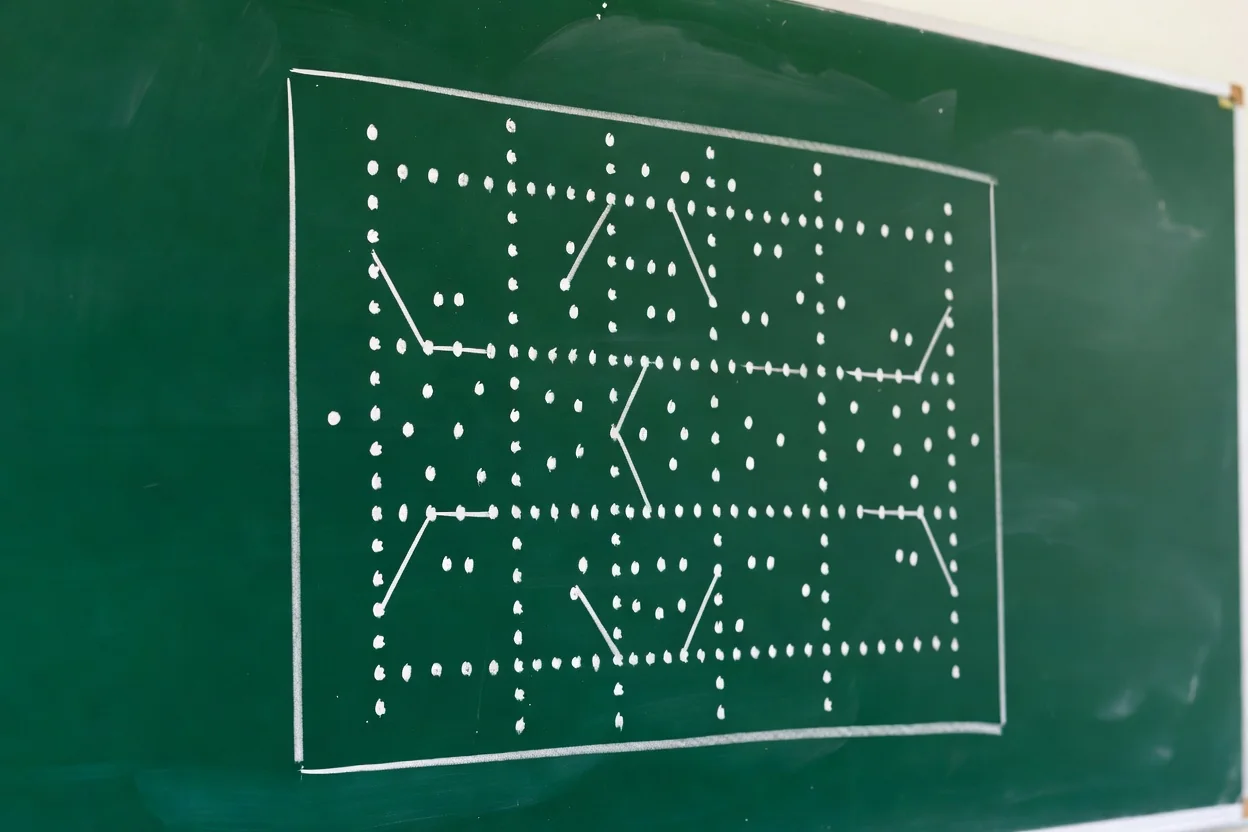
Football began with seven forwards chasing a dribble and ended, for now, with strikers who defend and defenders who build. The 160-year journey from the 2-3-5 pyramid to the false nine is a chain of answers: every formation in history solved a problem the previous one created. Follow the chain and modern football stops looking complicated.
Formations are not styles; they are technologies. Each one below won trophies, spawned a counter-technology, and left a fossil layer in today's game.
The pyramid and the dribbling age, 1863-1925
The earliest teams lined up 1-2-7 or 2-2-6, because the sport was dribbling: run with the ball until hacked down, then contest the scrimmage. Queen's Park of Glasgow scandalised England in the 1870s by passing, and the passing game spread north to south, settling by the 1880s into the 2-3-5 pyramid: two full-backs, three half-backs, five forwards in a fixed line. It ruled for four decades and its numbers still survive in tradition, which is why the right-winger is a 7 and the centre-forward a 9.
The 1925 offside change, which let attackers be onside with only two opponents behind them, detonated the pyramid. Chapman responded at Arsenal with the WM, 3-2-2-3: the centre-half dropped between the full-backs to make a back three, the inside-forwards withdrew, and the letters W and M appeared on the tactics board. England's WM was still gospel when Hungary tore it apart at Wembley in 1953.
- 2-3-5 pyramid: the default from the 1880s to the 1920s, five fixed forwards.
- WM (3-2-2-3): Chapman's answer to the 1925 offside change, first modern back three.
- 4-2-4: Brazil's 1958 innovation, the ancestor of every back-four system.
- Catenaccio: the libero behind the line, perfected by Herrera's Inter in the 1960s.
Brazil's 4-2-4 and the catenaccio answer
Brazil's 1958 World Cup win introduced the 4-2-4: four defenders, two screening midfielders, four forwards including a withdrawn one, Zagallo, who defended as an extra midfielder. It balanced the pyramid's attack with a genuine back four and became the base code for 4-4-2 and 4-3-3. Italy answered in the 1960s with catenaccio: Herrera's Inter put a sweeper behind the markers, countered with two passes, and won two European Cups conceding almost nothing.
The Dutch response was the era's leap forward. Total Football at Ajax and with the Netherlands made positions fluid, pressed as a unit and used the offside trap as an attacking tool. The 1970s argument between Dutch fluidity and Italian structure frames everything after it.
Sacchi, the back four, and the pressing age
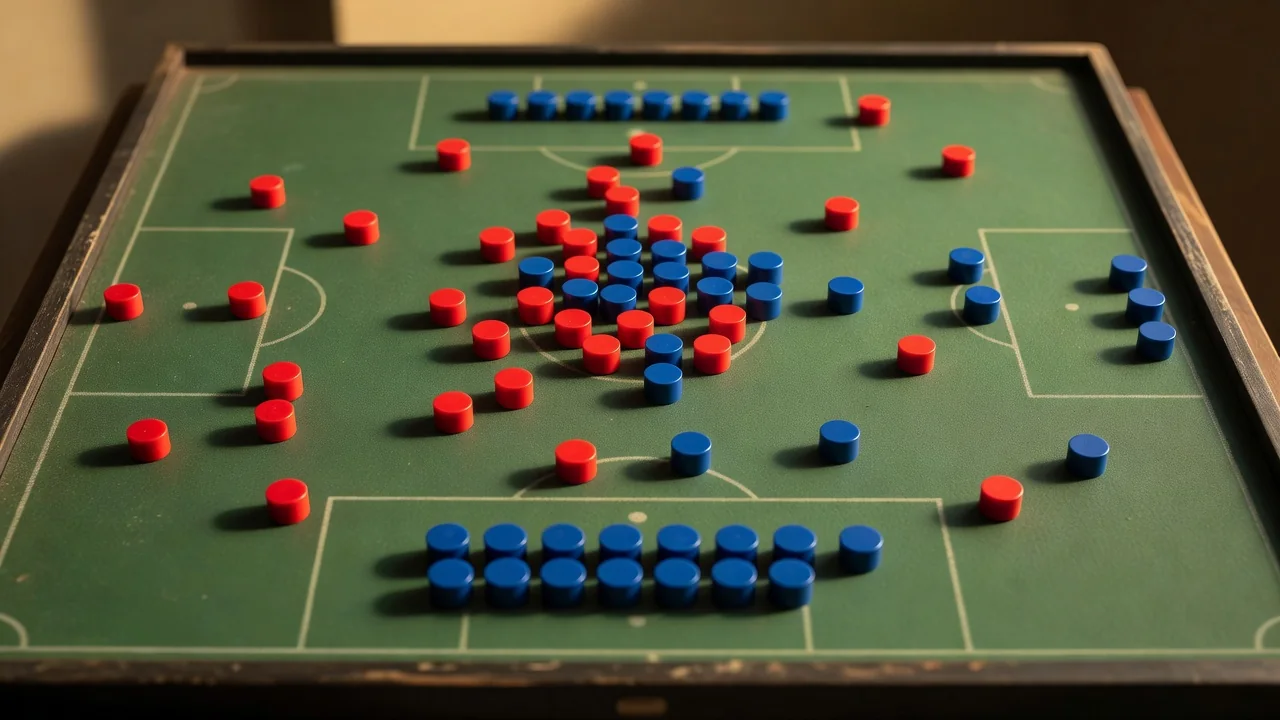
Arrigo Sacchi's Milan of 1988-90 resolved the argument with a flat back four, zonal marking and synchronised pressing: eleven players moving as one organism, the pitch made small by stepping up together. The sweeper died, the defensive line became a weapon, and the 4-4-2 became Europe's chassis for a decade. The 1992 back-pass rule supercharged it all: pressing now had a purpose, because the keeper could no longer rescue defenders with his hands.
The 1990s and 2000s added the midfield experiments: three at the back with wing-backs, the 4-2-3-1 that sheltered a number ten, Makélélé reinventing the holding role at Real Madrid and Chelsea so thoroughly the position took his name. Then Guardiola's Barcelona pushed possession to its extreme and revived the oldest ghost in the archive.
| System | Era | Problem it solved |
|---|---|---|
| 2-3-5 pyramid | 1880s-1925 | Organised the passing game |
| WM 3-2-2-3 | 1925-1950s | The 1925 offside change |
| 4-2-4 | 1958 onward | Balance between attack and a back four |
| Catenaccio | 1960s | Neutralising superior attacking sides |
| Total Football | 1970s | Beating man-marking with fluidity |
| Sacchi's 4-4-2 | 1988-2000s | Zonal pressing, the pitch made small |
| False nine | 2007-2012 | Dissolving zonal defences |
The false nine and the loop closing
The false nine, a striker who abandons the box so centre-backs have nobody to mark, was Hidegkuti's trick in 1953, rediscovered by Spalletti with Totti at Roma in 2007 and perfected by Guardiola with Messi in 2009. It dissolved zonal defences that had no man to pass on to, and it completed the loop: the most modern idea in football was a restoration of its oldest heresy.

The chain keeps extending: inverted wingers, the 3-2 build-up shape, goalkeepers as sweepers, and data models that redraw pressing maps weekly. Each claims novelty, and each, traced back, has a grandparent in this vault. Tactics is the one department of football where history is not nostalgia but the actual instruction manual.
Klopp's gegenpressing, inverted full-backs stepping into midfield, box midfields in build-up: each current fashion is another entry in the chain, another answer to the last answer. The numbers on the board change; the logic never does. Whoever solves the high press next will join a conversation that started on a Glasgow common in the 1870s, and the vault will be waiting to record it.
Keep digging in the vault

Offside: From Three Men to Millimetre Lines
A law written for schoolboys in 1863 has been rewritten three times, and each rewrite changed how football is played, coached and argued about.
2026-09-01
1992: The Back-Pass Ban That Changed Football Forever
One law change after a dire 1990 World Cup forced goalkeepers to become footballers. The modern game starts here.
2026-08-28
From Zero to Five: How Substitutions Changed the Game
For the first 90 years of organised football a tired or injured player simply played on. The road from zero substitutes to five rewired tactics.
2026-08-24