
Ajax 1971-73: Total Football and the Three-Peat
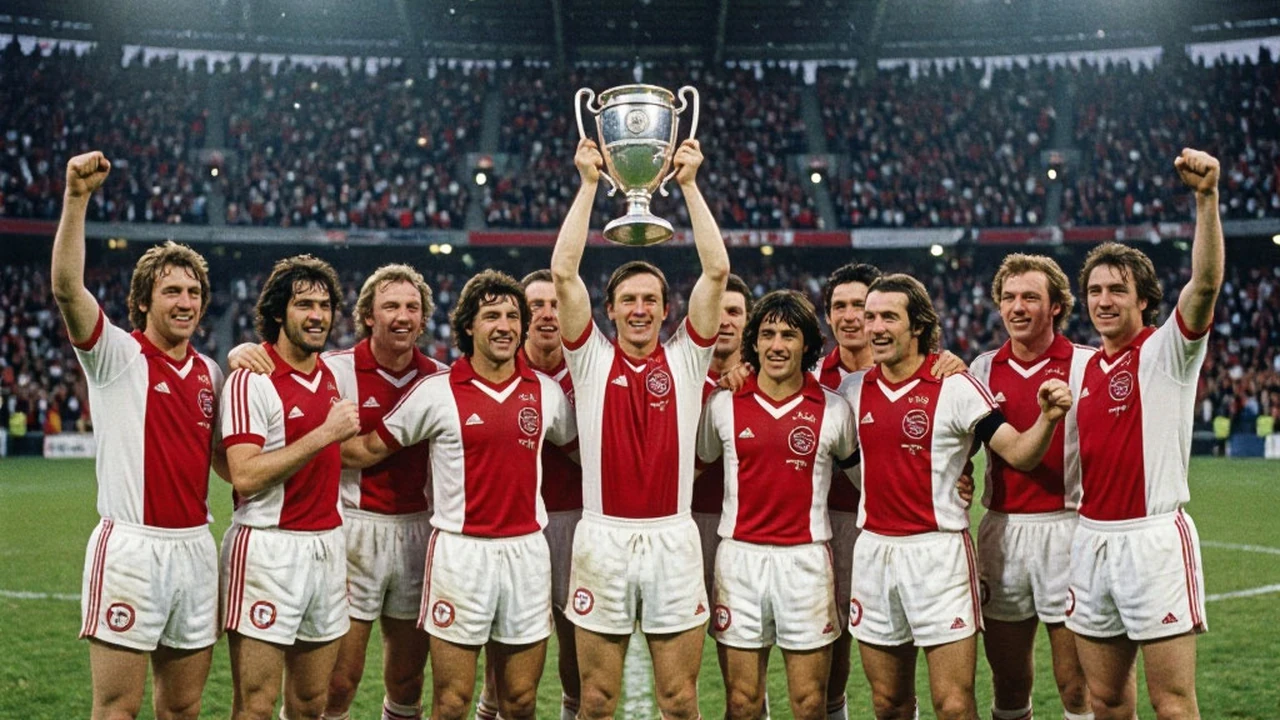
Between 1971 and 1973 a club from Amsterdam won the European Cup three times in a row and, in the middle of that run, produced what many historians call the finest club performance ever seen. Ajax under Rinus Michels and then Stefan Kovacs did not just win; they demonstrated a different way the game could be played, and the rest of football has been catching up ever since.
The trophies were the least of it. Total Football, the system of interchangeable positions and collective pressing that Ajax perfected, became the most influential idea in the sport's tactical history.
The machine Michels built
Michels took over a talented but chaotic Ajax in 1965 and imposed a brutal simplicity: every player must be able to play everywhere, press together, and keep the pitch big in attack and small in defence. Johan Cruyff was the on-pitch conductor, but the machine had many parts: Johan Neeskens' relentless running, Wim Suurbier and Ruud Krol as full-backs who played like midfielders, Arie Haan arriving from deep, Piet Keizer gliding on the left, Sjaak Swart and Johnny Rep on the right, and the sweeper Horst Blankenburg stepping into midfield when needed. In goal, Heinz Stuy swept behind a high line decades before the term existed.
The domestic results were absurd: Eredivisie titles in 1970, 1972 and 1973, including a 1971-72 season of 30 wins, one draw and three defeats with 104 goals scored. Europe was the real test, and Ajax passed it three times.
- 1971 final: Ajax 2-0 Panathinaikos at Wembley, van Dijk and Haan scoring.
- 1972 final: Ajax 2-0 Inter in Rotterdam, both goals by Cruyff.
- 1973 final: Ajax 1-0 Juventus in Belgrade, Rep scoring after four minutes.
- 1972 also brought the Intercontinental Cup, won against Independiente, and the first European Super Cup.
Rotterdam 1972: the masterpiece
The middle final, against Helenio Herrera's Inter, is the one connoisseurs point to. Inter were the high priests of catenaccio, European champions in 1964 and 1965, built to strangle exactly this kind of opponent. Instead Ajax strangled them: pressing in waves, switching positions until Inter's markers were chasing shadows, Cruyff dropping to collect the ball from his own centre-backs and reappearing on the edge of the Inter box seconds later.
Cruyff scored twice in the second half, the first a poacher's rebound, the second a header he somehow won against a defence built on heading. The 2-0 score flattered Inter. Herrera, the father of defensive football, conceded the future had arrived.

Kovacs, Cruyff's exit, and the aftermath
Michels left for Barcelona in 1971 and the Romanian Stefan Kovacs kept the machine running, arguably with a freer hand: the 1972 side that won everything was his. The empire's end was human, not tactical. Cruyff, outvoted in a players' ballot for the captaincy in 1973, forced a move to Barcelona, and Ajax lost the 1973 European Cup semi-final... in fact they never defended the third title as favourites again, falling in the following season's second round to CSKA Sofia. The core scattered across Europe, and by 1974 the team was mortal again.
| Season | Coach | Final opponent | Score |
|---|---|---|---|
| 1970-71 | Rinus Michels | Panathinaikos | 2-0 |
| 1971-72 | Stefan Kovacs | Inter Milan | 2-0 |
| 1972-73 | Stefan Kovacs | Juventus | 1-0 |
Why the legacy outweighs the trophies
Bayern matched the three-peat a year later and Real Madrid had already won five straight, so the medals alone do not make Ajax's case. The idea does. The pressing, the positional rotation, the goalkeeper as an outfield player, the academy-first model: each became orthodoxy somewhere, usually through Cruyff's Barcelona or Michels' 1988 Netherlands.

The three-peat looks even stranger in context: Ajax had lost the 1969 final 4-1 to Milan, a defeat that convinced Michels the side needed two more years of tactical drilling, and the club did not win the trophy again until 1995, when Louis van Gaal's young team beat Milan 1-0 with a side built on the same academy principles. That 1995 winner, scored by an 18-year-old Patrick Kluivert, is best read as the third generation of the idea that Cruyff, Michels and Kovacs proved between 1971 and 1973.
Three finals, three wins, and a philosophy exported to Barcelona, Munich and beyond: the vault ranks Ajax 1971-73 as the most consequential club side ever assembled, the team that proved a club could win everything and change everything at the same time.
When Guardiola's Barcelona drew comparisons to the great sides, Guardiola himself pointed past his own team to Amsterdam: everything we are, he said in essence, Ajax were first. Three finals, three wins, seven goals scored, none conceded. The vault keeps the films, and the films still look modern.
Keep digging in the vault
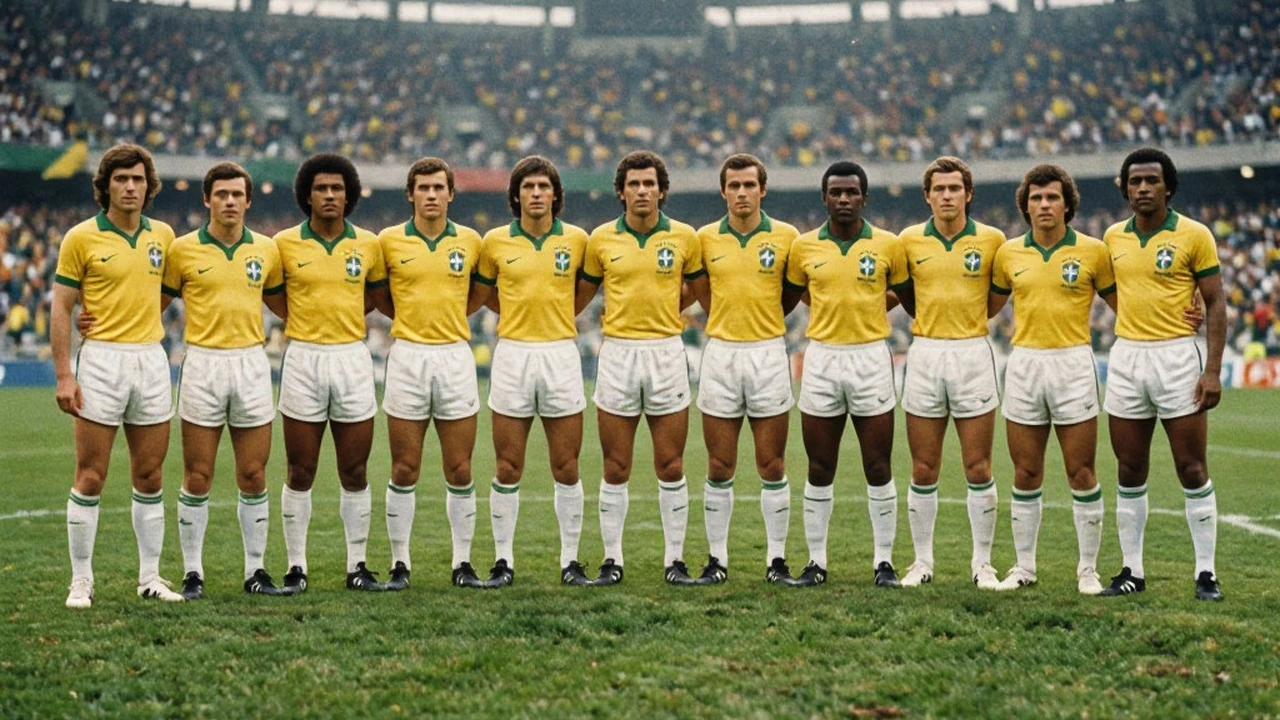
Brazil 1970: The Greatest Team Ever Assembled
Six matches, six wins, 19 goals and a final that ended with the most famous team goal ever scored. The 1970 Brazil side set the bar.
2026-09-01
Real Madrid 1956-60: Five European Cups in a Row
Five finals, five wins, 20 goals in those finals. The club that turned a new competition into private property for half a decade.
2026-08-29
Hungary Mighty Magyars: The Team That Schooled England
For four years Hungary barely lost. Then one rainy afternoon in Bern decided how history would remember the best team to fall at the last hurdle.
2026-08-23