Real Madrid 1956-60: Five European Cups in a Row
The European Cup was invented in 1955, and for its first five years it had exactly one owner. Real Madrid won the 1956, 1957, 1958, 1959 and 1960 finals, a streak no club has ever repeated and none has seriously approached since. Five consecutive titles, delivered by Alfredo Di Stefano, Ferenc Puskas, Francisco Gento and a cast that reads like the era's world eleven.
It is fashionable to discount the run as ancient history from a smaller competition. The finals themselves argue otherwise: comebacks, extra time, a 7-3 in Glasgow that veterans still call the greatest club performance ever played.
How the dynasty was assembled
President Santiago Bernabeu built the modern Real Madrid around the competition he helped create, and the signing of Di Stefano in 1953, prised from under Barcelona's nose after a transfer war that ended in a shared-rights compromise the Argentine walked away from, changed European football. Di Stefano was not a forward; he was the whole midfield and attack in one player, defending his own box and finishing in the other.
Puskas arrived in 1958, overweight and exiled after the Hungarian uprising, and became the most lethal left foot the competition had seen. Around them: Gento's pace on the left, Kopa and Rial inside, Santamaria in goal, Zarraga and Munoz holding. Coach Jose Villalonga delivered the first two titles, Luis Carniglia the next two, Miguel Munoz the fifth.
- Finals won: Reims 4-3 (1956), Fiorentina 2-0 (1957), Milan 3-2 a.e.t. (1958), Reims 2-0 (1959), Eintracht Frankfurt 7-3 (1960).
- Di Stefano scored in all five finals, seven goals in total.
- Gento eventually won six European Cups, adding 1966, still the individual record.
The five finals, briefly
The first, in Paris in 1956, set the pattern: Madrid went 2-0 down to Raymond Kopa's Reims inside ten minutes and won 4-3, with Kopa joining them weeks later. The second was a coronation at home, 2-0 against Fiorentina in front of 124,000 at the Bernabeu. The third needed extra time in Brussels, Gento settling a 3-2 win over a Milan side featuring Schiaffino and Liedholm.
By 1959 the routine was established: Reims again, this time beaten 2-0 in Stuttgart. And then came Hampden Park, 18 May 1960, in front of 127,621 people, the largest crowd ever at a European Cup final. Eintracht Frankfurt led early. Madrid answered with seven: Puskas scored four, Di Stefano three. The 7-3 is still the highest-scoring final in the competition's history.
Why the streak ended, and what it left
Barcelona knocked Madrid out in the first round of the 1960-61 competition, and the empire aged. But the five titles created the identity the club has traded on ever since: the European Cup as property, the comeback as a birthright, the white shirt as the competition's default finalist. Madrid's later generations, the Quinta del Buitre era, the three-peat of 2016-18 under Zidane, all chased the standard set between 1956 and 1960.
| Year | Opponent | Score | Venue |
|---|---|---|---|
| 1956 | Stade de Reims | 4-3 | Parc des Princes, Paris |
| 1957 | Fiorentina | 2-0 | Bernabeu, Madrid |
| 1958 | AC Milan | 3-2 a.e.t. | Heysel, Brussels |
| 1959 | Stade de Reims | 2-0 | Neckarstadion, Stuttgart |
| 1960 | Eintracht Frankfurt | 7-3 | Hampden Park, Glasgow |
Measuring the achievement honestly
The honest caveats exist. The early European Cup had sixteen clubs, straight knockout, and several champions of major leagues absent or weakened. Benfica, who won the next two titles, beat Madrid in the 1962 final 5-3 with Eusebio, proof the gap was closable. Context noted, the streak still stands alone.
The individual numbers still stagger. Puskas scored 242 goals in 262 matches for Madrid despite arriving at 31 with a year's exile behind him. Gento, the only survivor of all five finals as a starter, finished with six European Cups after 1966, a record that has outlived the Champions League era entirely. Di Stefano, who scored 308 goals for the club, stayed on as honorary president until his death in 2014, a living bridge between the five-in-a-row team and the modern galactico era the Bernabeu demands.
The vault files the five consecutive finals as the competition's founding myth: every comeback the club has staged since, from 2014 to 2022, is consciously or not an echo of the team that won the European Cup before winning it was a habit anyone else could copy.
Ajax and Bayern later won three in a row; Madrid themselves won three straight from 2016 to 2018 and still fell two short of their own record. In a tournament redesigned to favour the richest, five consecutive titles now requires surviving roughly 65 European matches without a single off night. That is why the white machine of Di Stefano and Puskas remains, seven decades on, the competition's unreachable benchmark.
Keep digging in the vault
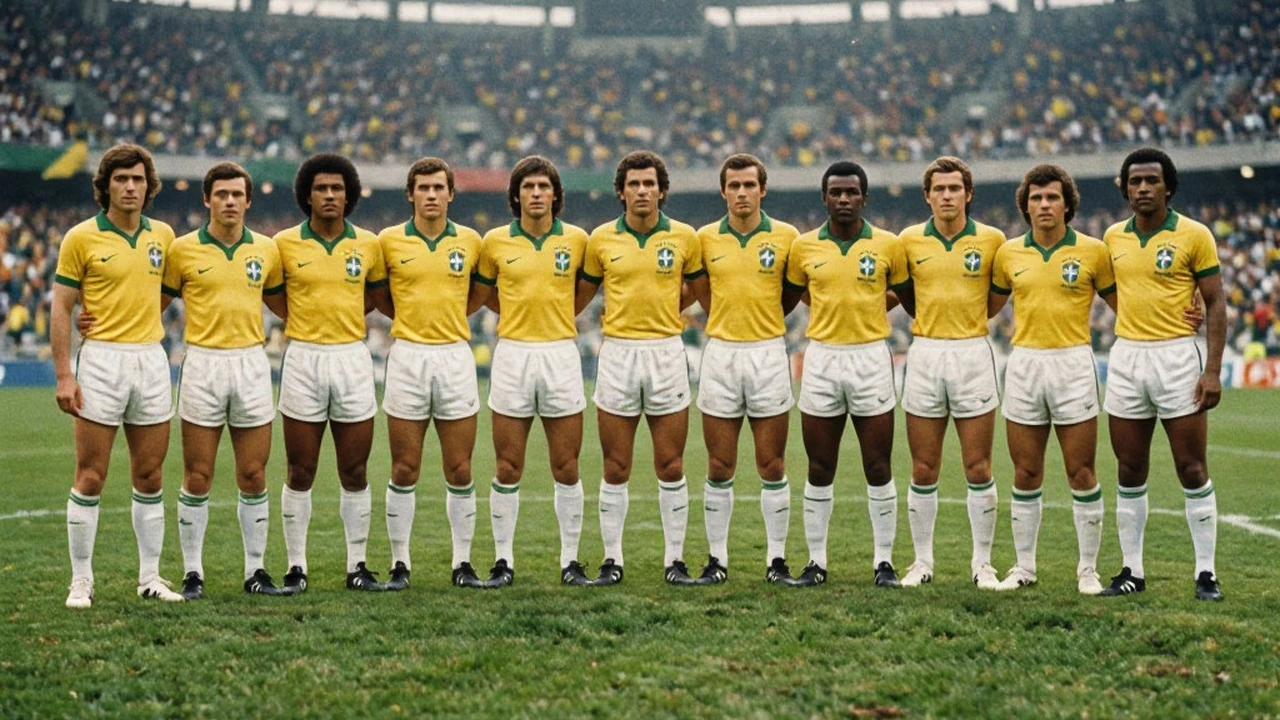
Brazil 1970: The Greatest Team Ever Assembled
Six matches, six wins, 19 goals and a final that ended with the most famous team goal ever scored. The 1970 Brazil side set the bar.
2026-09-01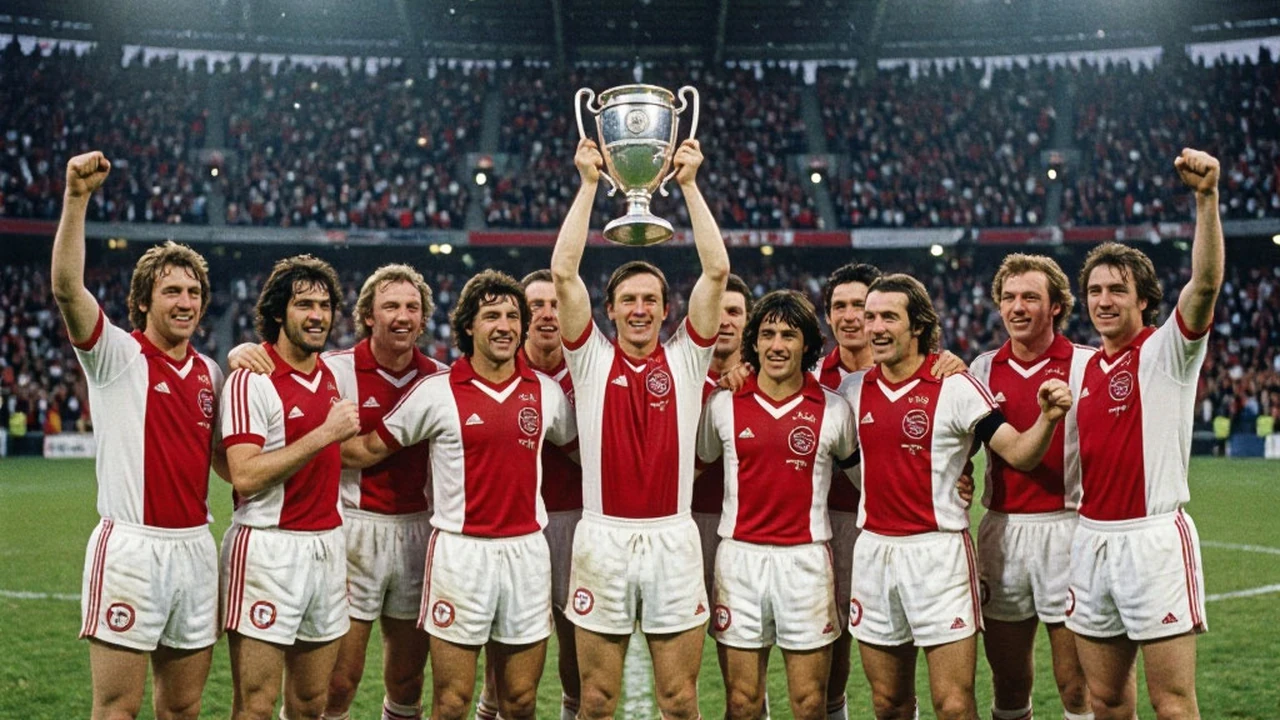
Ajax 1971-73: Total Football and the Three-Peat
A club from Amsterdam beat Inter, Juventus and Panathinaikos in three straight finals and exported a philosophy that still shapes the game.
2026-08-26
Hungary Mighty Magyars: The Team That Schooled England
For four years Hungary barely lost. Then one rainy afternoon in Bern decided how history would remember the best team to fall at the last hurdle.
2026-08-23